- Member of -

EDITORIALS:

Author:

Fernanda García
Fernanda García

About

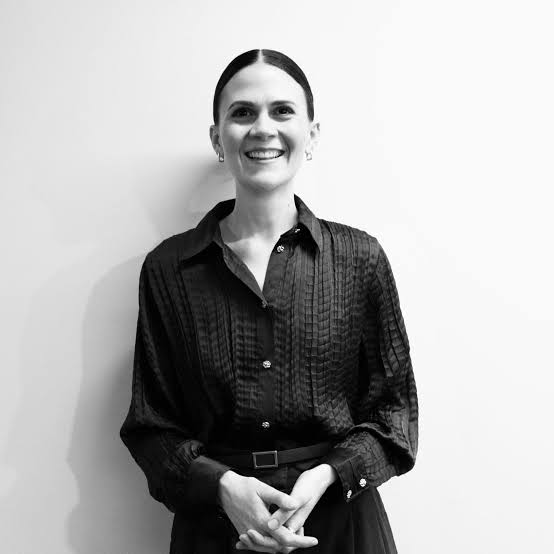
A graduate in Political Science from the Autonomous Technological Institute of Mexico (ITAM), she holds a Master's degree in Public Policy from the London School of Economics and Political Science (LSE). She is certified in Evidence for Equity by Harvard University and completed a diploma program in Gender and Feminisms at the University of the Cloister of Sor Juana. Fernanda promotes the development of human capital and the economic participation of women in Mexico. At IMCO, she focuses on measuring gender gaps in the labor market, as well as analyzing the supply and demand of talent to expand economic opportunities. She also actively works on expanding strategic alliances and securing institutional funding. Before joining IMCO, she worked as a public affairs consultant at the firm De la Calle, Madrazo, Mancera.

Location:

Author Publications:

Share this post:

VOICES:

Author:

Fernanda García
Fernanda García

About

A graduate in Political Science from the Autonomous Technological Institute of Mexico (ITAM), she holds a Master's degree in Public Policy from the London School of Economics and Political Science (LSE). She is certified in Evidence for Equity by Harvard University and completed a diploma program in Gender and Feminisms at the University of the Cloister of Sor Juana. Fernanda promotes the development of human capital and the economic participation of women in Mexico. At IMCO, she focuses on measuring gender gaps in the labor market, as well as analyzing the supply and demand of talent to expand economic opportunities. She also actively works on expanding strategic alliances and securing institutional funding. Before joining IMCO, she worked as a public affairs consultant at the firm De la Calle, Madrazo, Mancera.

Location:

Author Publications:

Share this post:

NEWS:

Author:

Fernanda García
Fernanda García

About

A graduate in Political Science from the Autonomous Technological Institute of Mexico (ITAM), she holds a Master's degree in Public Policy from the London School of Economics and Political Science (LSE). She is certified in Evidence for Equity by Harvard University and completed a diploma program in Gender and Feminisms at the University of the Cloister of Sor Juana. Fernanda promotes the development of human capital and the economic participation of women in Mexico. At IMCO, she focuses on measuring gender gaps in the labor market, as well as analyzing the supply and demand of talent to expand economic opportunities. She also actively works on expanding strategic alliances and securing institutional funding. Before joining IMCO, she worked as a public affairs consultant at the firm De la Calle, Madrazo, Mancera.

Location:

Author Publications:

Share this post:

EXPERIENCES:

Author:

Fernanda García
Fernanda García

About

A graduate in Political Science from the Autonomous Technological Institute of Mexico (ITAM), she holds a Master's degree in Public Policy from the London School of Economics and Political Science (LSE). She is certified in Evidence for Equity by Harvard University and completed a diploma program in Gender and Feminisms at the University of the Cloister of Sor Juana. Fernanda promotes the development of human capital and the economic participation of women in Mexico. At IMCO, she focuses on measuring gender gaps in the labor market, as well as analyzing the supply and demand of talent to expand economic opportunities. She also actively works on expanding strategic alliances and securing institutional funding. Before joining IMCO, she worked as a public affairs consultant at the firm De la Calle, Madrazo, Mancera.

Location:

Author Publications:

Share this post:

Youth in the World:

Author:

Fernanda García
Fernanda García

About

A graduate in Political Science from the Autonomous Technological Institute of Mexico (ITAM), she holds a Master's degree in Public Policy from the London School of Economics and Political Science (LSE). She is certified in Evidence for Equity by Harvard University and completed a diploma program in Gender and Feminisms at the University of the Cloister of Sor Juana. Fernanda promotes the development of human capital and the economic participation of women in Mexico. At IMCO, she focuses on measuring gender gaps in the labor market, as well as analyzing the supply and demand of talent to expand economic opportunities. She also actively works on expanding strategic alliances and securing institutional funding. Before joining IMCO, she worked as a public affairs consultant at the firm De la Calle, Madrazo, Mancera.

Location:

Author Publications:

Share this post:

Author:

Fernanda García
Fernanda García

About

A graduate in Political Science from the Autonomous Technological Institute of Mexico (ITAM), she holds a Master's degree in Public Policy from the London School of Economics and Political Science (LSE). She is certified in Evidence for Equity by Harvard University and completed a diploma program in Gender and Feminisms at the University of the Cloister of Sor Juana. Fernanda promotes the development of human capital and the economic participation of women in Mexico. At IMCO, she focuses on measuring gender gaps in the labor market, as well as analyzing the supply and demand of talent to expand economic opportunities. She also actively works on expanding strategic alliances and securing institutional funding. Before joining IMCO, she worked as a public affairs consultant at the firm De la Calle, Madrazo, Mancera.

Location:

Author Publications:

Author networks:

Website:

Share this post:

Twitter
Facebook
WhatsApp
Telegram

Subscribe to the newsletter
of Youth:

By Fernanda García

Director of Society-IMCO

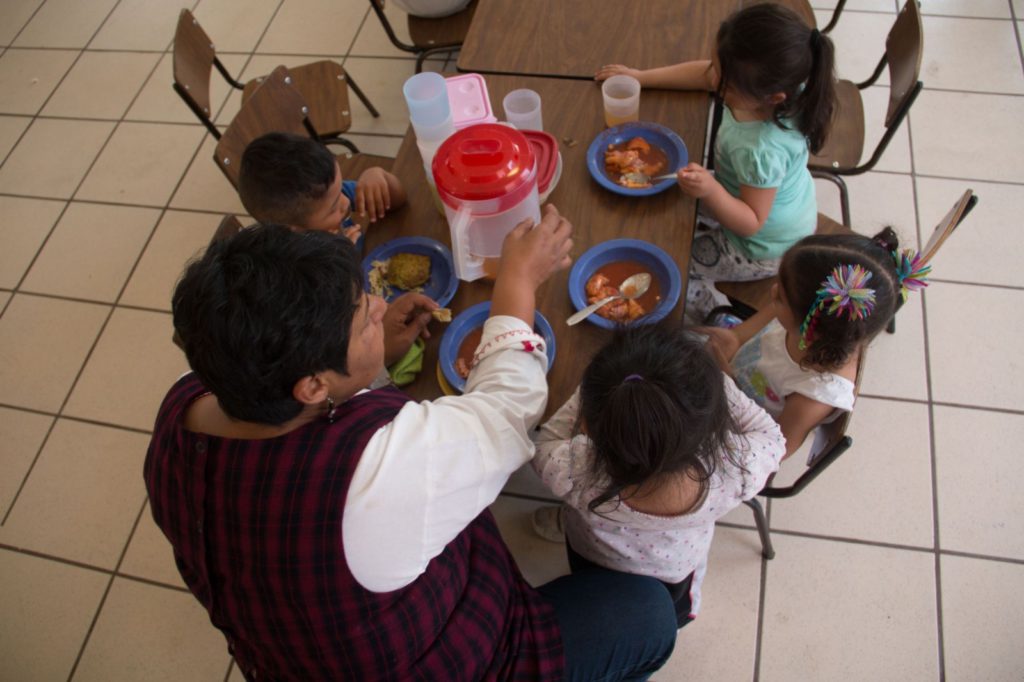
Who Cooked Adam Smith's Dinner? is a book that challenges the omission of care work from traditional economic theory. While Adam Smith wrote about markets, productivity, and wealth, his mother cooked for him so he could focus on his studies. Care work is essential for society to function, yet it rarely appears in economic statistics or debates. We all need care at some point in our lives: during childhood, illness, or old age. However, the responsibility for providing it has fallen on families and, within them, primarily on women.

Since 2018, legislative discussions have been underway in the Mexican Congress to create a National Care System, a framework for coordinating public policies related to care, which currently does not exist in Mexico. More than 15 ordinary sessions and two full legislative terms have passed without significant progress. Meanwhile, individual states have begun to take action. At least 19 states have submitted initiatives to create subnational care systems, and only two have passed legislation on the matter: Jalisco in 2024 and Mexico City last week.

There's a quote from Claudia Goldin, Nobel laureate in Economics, that I often cite: "Without equality in the home, there will hardly be equality in the labor market." Every time I mention it, the response usually suggests that it's a matter for families to resolve themselves. This view leaves out a fundamental part of the discussion: recognizing that caregiving transcends the private sphere and constitutes a shared responsibility that requires public action.

The new legislation in Mexico City establishes the right to care, to be cared for, and to self-care. It recognizes both those who require support and those who provide it. And, finally, it states that the provision of care should be a shared responsibility among households, the government, the private sector, and civil society. This is a significant change.

Currently, around three million people in Mexico City require some form of care, and a similar number provide it, mostly unpaid. Together, these two groups represent two-thirds of the city's population. In Mexico City, women dedicate an average of 34 hours per week to these tasks, compared to 16 hours for men. This unequal distribution has economic consequences, limiting women's access to employment, reducing their income, and restricting their opportunities for professional development.

Granting the right to care is just the first step. The real test will begin with the implementation of the law. The legislation creates new coordination mechanisms, involves more than 40 authorities within the state, and mandates the development of a coordinated service offering that currently operates in a fragmented manner. It also stipulates that the budget allocated to care must be progressive and include specific monitoring mechanisms. All of this sounds desirable, but it entails considerable challenges in terms of coordination, institutional capacity, and funding.

Public discourse often focuses on guaranteeing new rights. But rights only become real when the conditions exist to exercise them. It would be of little use if a mother cannot find a daycare center near her workplace, if an elderly person lacks access to specialized services, or if a caregiver continues to face precarious working conditions.

The approval of the Mexico City Care System Law is good news. After years of debate, it represents a significant step forward in building a more co-responsible society. Success will not be measured by the law's publication in the Official Gazette. It will be measured by the capacity to transform that legal recognition into time, opportunities, and well-being for millions of people.

* Article originally published on the IMCO website. https://imco.org.mx/el-derecho-al-cuidado/ 

It is a free and accessible digital platform that serves as an information and collaboration tool between youth and institutions for employability in CDMX

More posts from Fernanda García:

More posts from Fernanda García: