


By IMCO Staff
The Mexico City Care Law sets out an ambitious vision for guaranteeing this right, but its implementation will require defining operational and budgetary efforts.
On May 26, 2026, the Congress of Mexico City (CDMX) unanimously approved the Care System Law, making it the second federal entity with legislation on the matter after Jalisco. The IMCO analyzed the main provisions, implications, and implementation challenges.
- Nouns: Fundamental changes related to the recognition of rights and the definition of persons entitled to protection.
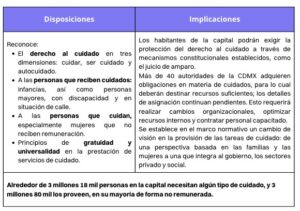
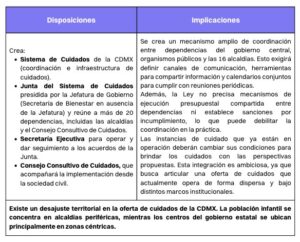
- Institutional: Modification in the institutional design of the Public Administration, grants powers, in addition to integrating new coordination mechanisms and instruments to address care.
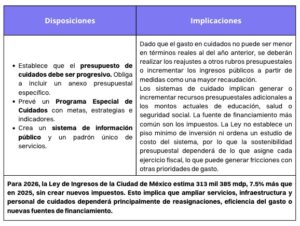
- Budget: Modifications in the allocation of public resources and in the mechanisms provided for their use and monitoring.
- Changes related to the recognition of the labor rights of caregivers and the valuation of care work.
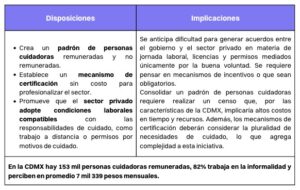
The consolidation of the National Care System could help reduce the caregiving burden that currently falls primarily on women. In Mexico City, women dedicate an average of 34 hours per week to these tasks, compared to 16 hours for men. If the System succeeds in expanding its care coverage, it could free up time for more than three million people who currently perform unpaid work in Mexico City, facilitating their participation in educational or professional activities.
Challenges ahead
The transitional articles establish a maximum period of six months for the installation of the Care System Board and an additional three months for the presentation of the draft regulations. However, meeting these deadlines presents a challenge, given that the approval of this law was the result of a legislative process that spanned more than a decade and required extensive coordination of political and social efforts. This adds to other challenges the Mexico City government will face in consolidating a care system:
-
Ensure coordination between departmentsIn practice, aligning the budgets and resources of the involved agencies around common objectives established in the Care Program will be a challenge. Institutions may resist the organizational changes required for coordination, and simulation schemes with no results may be implemented.
-
Reaching agreements with different stakeholdersAchieving the goals of the care system will require the Mexico City government to establish agreements with various stakeholders. For example, with the boroughs to coordinate service provision, with the Congress, which will approve the budget annually, and with federal government agencies, such as the DIF (National System for Integral Family Development), which have responsibilities related to care.
-
Allocate budgetRecognizing the right to care must be accompanied by sufficient resources and a sustainable strategy to finance the services, programs, infrastructure, and personnel required for its implementation. Authorities must guarantee a progressive allocation of resources and define clear implementation priorities.
-
Strengthening citizen participationThe initiative includes a mechanism for social participation and monitoring to assess the system's progress. It is important that the analyses and proposals made by the Advisory Council be taken into account for improvement and adjustment actions.
The approval of this law is a fundamental step toward guaranteeing the right to care in the state. However, its success will depend on the budgetary, institutional, and public policy decisions that will be defined in the regulations.