



By Alix Castillo
Psychology Student-Member of
GOYN Advisory Group Barranquilla
The plague of silence: At what point did we decide to return to the past?
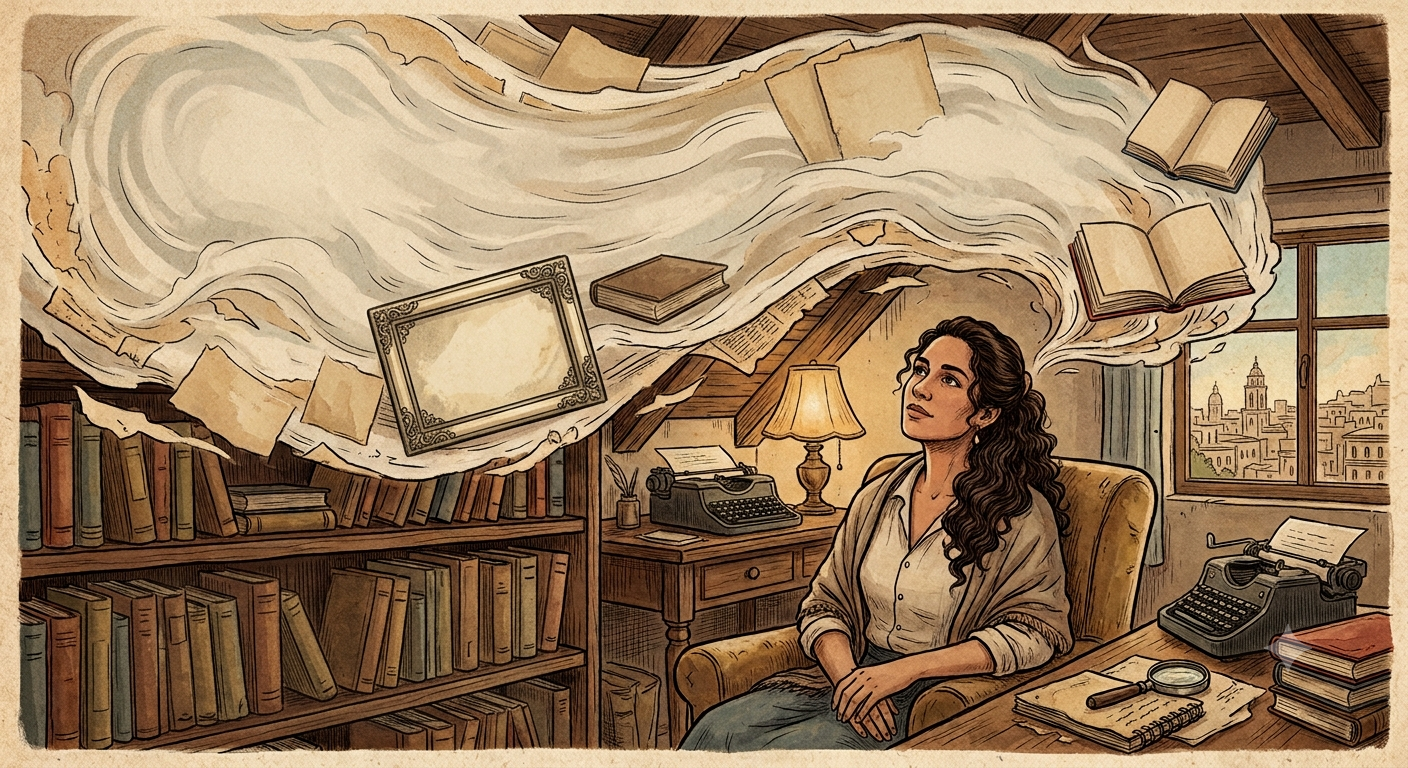
Memory is not just the ability to remember; it also allows us to understand who we are. From a psychological perspective, autobiographical memoir It explains how we organize the memories that build our identity: it not only stores events, but also gives them meaning and allows us to understand where we come from in order to know who we are in the present. Perhaps the same is true for societies. Just as a person who loses their memory can lose part of their identity, a society that loses its historical memory also risks forgetting the values and struggles that define it.
In One Hundred Years of SolitudeIn his novel, Gabriel García Márquez portrays Macondo as facing the plague of insomnia. However, the real danger was never the inability to sleep, but rather the beginning of forgetting. The inhabitants started by forgetting the names of things and ended up labeling them to remember what they were and what they were for, fearing that one day even that effort would no longer be enough. Today, it seems we face an even more dangerous plague: the forgetting of our own history. We forget the struggles that came before us, we forget the past sacrifices, we forget the price paid to win rights we now take for granted, and, over time, we also forget why it was necessary to defend them. The greatest threat to a society is not always conflict; sometimes it is oblivion..
We often believe that rights are permanent. We grow up with them, exercise them naturally, and end up assuming they've always been there and always will be. This sense of permanence makes us forget that, in reality, no right is immutable. And perhaps there is nothing more dangerous than believing that what was so hard-won no longer needs defending.
For centuries, women were excluded from political life and forced to accept decisions about a future in whose construction they had no say. Women's suffrage was not a gift from governments, but the result of decades of marches, campaigns, publications, and women who challenged the established order to claim a right that today seems self-evident. Most Western countries recognized this right between the 1910s and 1950s, making it a very recent achievement, historically speaking. In Colombia, women exercised their right to vote for the first time in 1957, during the plebiscite that ushered in the National Front. In other words, we have been considering it normal for a woman to elect her leaders for less than seventy years. During that struggle, the arguments for denying them this right were clear: it was claimed that women were "too emotional" to participate in politics, that their place was in the home, and that voting would distract them from their duties as wives and mothers. What is unsettling is that these arguments never completely disappeared. Over time they stopped expressing themselves with the same words, but they retained the same intention: to convince society that certain rights could be discussed again.
Seventy years may seem like a long time in a lifetime, but they are just a moment in history. And when a society forgets how recent a conquest is, it also begins to forget how easy it can be to lose it..
In recent years, even in democracies that have historically presented themselves as defenders of individual liberties, debates that seemed to have been settled have begun to resurface. In the United States, some sectors have even publicly questioned whether women's suffrage should continue to exist, while other women have stated that they would be willing to relinquish that right in the name of a more traditional family model.
Beyond political stances, what is truly disturbing is not that these ideas exist, but that they seem debatable again. If a right won just a few decades ago can once again become a subject of debate, perhaps it was never as permanent as we thought..
But how does this happen? How does a society begin to question a right that for decades seemed unquestionable? Nothing changes overnight. Ideas don't suddenly emerge; they gradually become normalized, until one day we realize we can no longer remember when they changed. The mere-exposure effect suggests that the more we are exposed to an idea, the more familiar and acceptable it becomes, even if at first we considered it dangerous or questionable. Laws are usually the final step. Long before the legal codes change, the conversations have already changed.
We often hear that the past was always better. There's a tendency to idealize the past, a nostalgia that, while it may seem harmless, also has the power to shape how we understand the present. In this desire to return to tradition, aesthetics have emerged that haven't hidden their purpose. One example is the tradwive movement: women who showcase on social media the charm of staying home, caring for children, and adopting a lifestyle inspired by past decades. And this, in itself, isn't wrong; every woman is free to choose how she wants to live. However, this aesthetic has also opened the door to a broader question: to what extent should we return to the past? Are we remembering the whole story or just the pleasant parts? Because, if we're talking about going back, we must also remember that this same past was the stage on which many women were denied the possibility of deciding on their education, their work, their inheritance, and, of course, their vote.
When someone warns us about ideas we're beginning to normalize, we often respond that it's an exaggeration, that in our country and under our laws, such things would never happen. But is that really true? There are countless examples that demonstrate the fragility of women's rights, but I want to focus on two. Margaret Atwood, author of The Handmaid's Tale and The Testaments, vowed never to write anything that hadn't already happened somewhere in the world. Her novels don't imagine new forms of oppression; they reconstruct, based on history, how rights are first questioned before they are restricted. Reality also offers us a painful example. Just a few years ago, many women in Afghanistan could study, work, leave their homes, and dress as they pleased. Today, after the return of the Taliban regime, they have lost many of those freedoms and are subject to restrictions that not long ago seemed unthinkable. At what point did those women imagine that one day they would lose so much of their freedom? And at what point did we convince ourselves that something like that could never happen to us?
An idea widely attributed to Simone de Beauvoir says “Never forget that a political, economic, or religious crisis will be enough to bring women’s rights back into question. These rights are never guaranteed; you must remain vigilant throughout your lives.”
Perhaps the greatest lesson is not living in fear of losing our rights, but understanding that none of them are permanent. History reminds us that every conquest can be challenged when we forget how it was won. That is why it is worthwhile to carefully examine the ideas, narratives, and trends that, however innocuous they may seem, can slowly transform the way we understand our freedom.
Forgetting costs nothing, but it can be very expensive.In Macondo they managed to survive the plague of insomnia. The real question is, will we manage to survive the tragedy of oblivion?
References:
Atwood, M. (1985). The Handmaid's TaleMcClelland and Stewart.
Atwood, M. (2019). Wills. Nan A. Talese/Doubleday.
García Márquez, G. (1967). One Hundred Years of Solitude. Sudamericana Publishing House.
Halbwachs, M. (1950). The collective memory. Presses Universitaires de France.
National Civil Registry. (n.d.). History of women's suffrage in Colombia.
Zajonc, RB (1968). Attitudinal effects of mere exposure. Journal of Personality and Social Psychology, 9(2), 1–27.