


By Arely Guarneros Contreras
Youth Advisory Group (GAJ) GOYN – CDMX
On Friday, February 20th, at Cri Cri Park, located within the “Elena Poniatowska” Care Circuit, between 10:30 a.m. and 2:00 p.m., one of the most laborious yet enriching events I have ever participated in took place. The Global Youth Opportunity Network (GOYN), along with its Youth Advisory Group (of which I am a member), organized the consultation forum: “Youth Opportunity Forum: The Future of Education and Decent Work in Mexico City.”
This article aims to narrate this event from my experience at the education working group, intending to portray the voices of the young people who participated in the group and reflect on their contributions.
It all started with the GOYN coordinating team, who saw in the organization of a consultation forum for the 2025–2045 General Development Plan, the opportunity to listen to the young voices of Mexico City, along with their needs, so that these would be taken into account in the preparation of the document.
The GOYN team, including the Youth Advisory Group (GAJ), spent nearly a month organizing the event: from the venue and date to the guests, travel arrangements, and other details. Right up until the last day, the team worked to create a forum that fulfilled its purpose of listening to and addressing the needs of young people seeking opportunity.
The event began with registration, while a band played in the background. Afterward, members of GAJ, the GOYN coordinating team, and representatives from government agencies shared their perspectives on the importance of the forum. Later, we went to the working groups, where my colleagues from GAJ and I met the young people who would be participating.
The education panel included diverse voices: some with firm and direct opinions, some timid personalities who could better express their ideas on paper, and others with teaching experience; together, they gave the panel a variety of perspectives that helped enrich the analysis of education in Mexico City.
To be honest, I didn't intervene much in the interactions at first; I let my colleagues moderate the dialogue. However, listening to everyone (without intervening) allowed me to help gather the ideas later on, and consequently, to write this article.
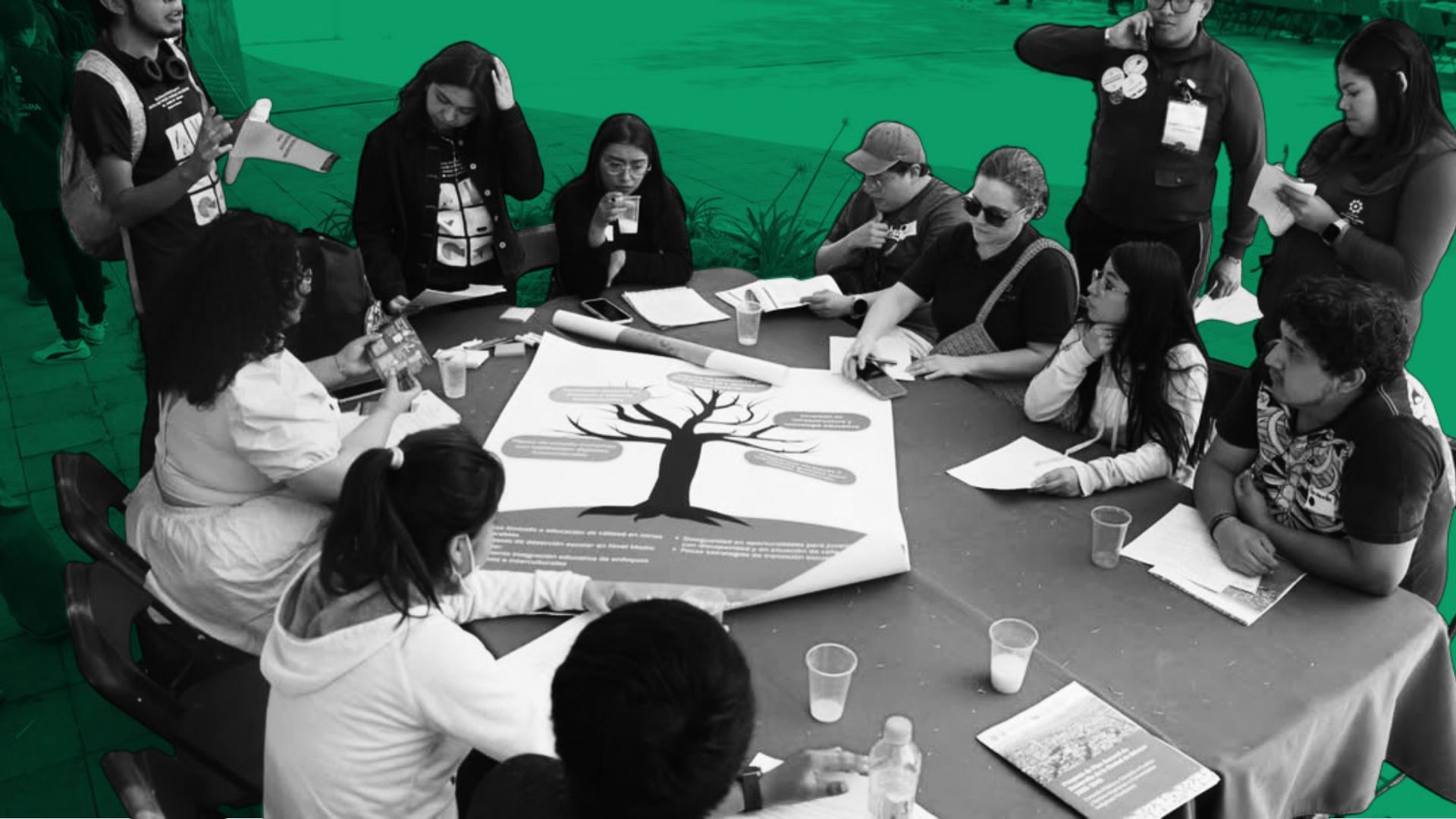
The format followed by all the working groups was the "problem tree," in which we identified problems, their causes, and solutions. At the education working group, we heard different opinions on the same problem, which at first might have seemed like a debate of ideas, but in reality, they were different approaches to the same issue.
For example, when discussing school dropout, some young people perceived that it was more likely they would continue studying with family support, while others saw it as a response in which young people ceased to value formal education, leading them to abandon their studies. Certainly, both are valid viewpoints that reflect the same lack of access to education within the Jóvenes Oportunidad program. On the one hand, there are economic and employment conditions that can force young people to depend on family support to continue their studies; on the other hand, there is also the perception that, although education can improve job opportunities, it does not guarantee better living conditions. This can lead some young people to consider entering the workforce, even in the informal sector, as a more viable option. The same young person may find themselves in both situations, and listening to these perspectives helps us understand that there is more than one cause for the same problem, thus improving our understanding of the obstacles young people face in continuing their education.
At the table, we were able to deepen this understanding when we met four young people who worked for the Iztapalapa mayor's office on its waste management system. The atmosphere shifted completely: what began as a consultation to gather opinions on the issue in general became a more personal conversation. We stopped asking about all young people and focused solely on getting to know those at the table, their aspirations, the reasons they hadn't been able to continue their studies, what might motivate them to return to school, and how we could help them. We recognized that, as the term "opportunity youth" suggests, these are young people who face structural barriers, but with their resilience and the opportunity for inclusion (in this case) in education, they can improve their lives and contribute to society.
We encountered various stories: one of them dropped out of school because his family wouldn't allow him to continue and he had to work; he told us he would return to school if he received financial assistance. Another told us he would like to be a chef, and we shared information about the Gastromotiva program and that he could receive free training to become a kitchen assistant. Overall, it was clear that they were willing to resume their education, but felt limited because they perceived a lack of opportunity (whether due to lack of family support, financial assistance, etc.).
The discussions concluded when the conclusions were presented to the other participants, including the Iztapalapa mayor's office team. Finally, the event was officially closed, and everyone cleaned up.
This forum has allowed me to reflect on the new experiences and people I've met. To begin with, I must acknowledge that no matter how long we spend planning something, unforeseen events will inevitably occur during execution, and even so, the work done retains its value.
Specifically within the working group, I believe it's important to continue investigating who is affected by certain problems and how, to keep seeking solutions, discussing the issue, but above all, to maintain continuity. I've often wondered: what happened to those young people we met? I can't know for sure, but assuming nothing happened, that they didn't receive any guidance or help after our conversation, I wonder if it truly benefited them. I think part of addressing these problems involves: talking about them constantly, but also monitoring how they evolve; proposing solutions, but also providing feedback and continuous improvement; informing young people about the solutions we propose, and finding out if they would actually use them, or holding consultation forums to understand people's needs, but on an ongoing basis.
It is also important to recognize that there are various factors that influence education and young people; to understand that, as biopsychosocial beings, we are not just "students," that your family, health, and socioeconomic situation influences your education, and that this type of consultation allows us to learn about more factors than we were aware of and broaden our perspectives, in order to improve our solutions.
Based on the discussions at the working group meeting, it can be concluded that there is indeed an interest in education. Even so, I believe it is crucial to continue fostering this interest so that it grows collectively among the residents of Mexico City. With greater public interest, we can expand our understanding of the underlying causes, improve solutions, and recognize their implementation as a shared responsibility.
In short, the forum fulfilled its purpose, and now the ideas of these young people can be taken into account to plan the future of education in their city; and I, personally, also learned things that I will use later.