


By Itzel López Cuéllar
Bachelor of Arts in Languages - UDAL
Talking about labor inclusion of young opportunityFor me, it's about speaking from experience and from a reality that thousands of young people face every day. For a long time, when looking for a job, I encountered closed doors, requirements that seemed impossible to meet, and the constant feeling that I wasn't good enough because I lacked prior experience. It wasn't a lack of desire to work, learn, or commit myself, but rather the absence of real opportunities that trusted in the potential of those of us who simply need a first chance to demonstrate what we are capable of.
Young people often face numerous barriers when trying to enter the job market. Among the most common are a lack of formal experience, limited access to specialized training, and recruitment processes that fail to consider the social and economic circumstances of many young people. These barriers create a vicious cycle: they don't gain experience because they can't find a job, and they can't find a job because they lack experience. This situation not only hinders professional development but also negatively impacts the self-esteem and confidence of those striving to get ahead.
In this context, job inclusion programs play a fundamental role.
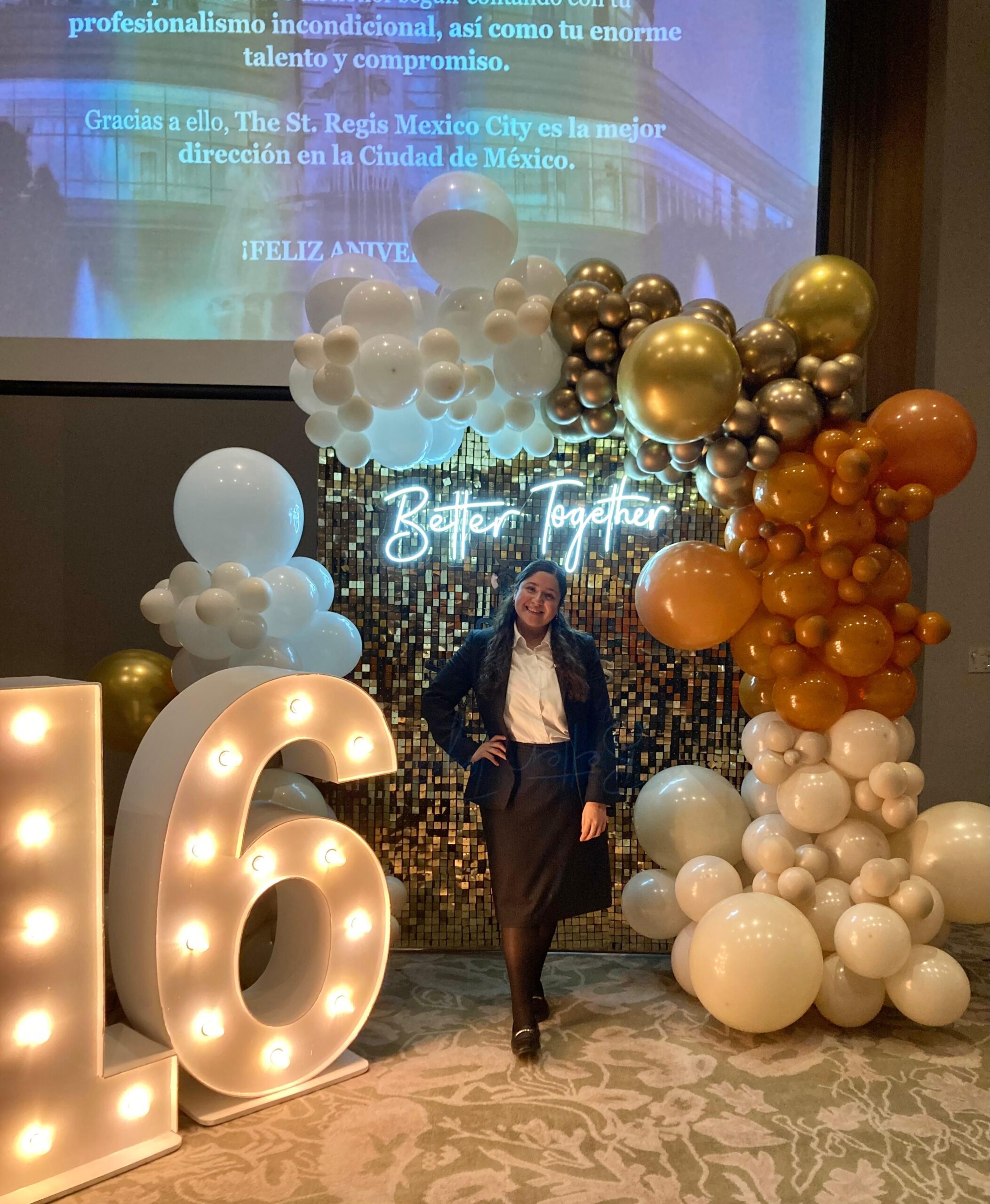
During the period from March to August 2025, I had the opportunity to be part of a program promoted by the foundation “World Vision”which gave several young people the opportunity to work for six months at one of the group's most prestigious hotels “Marriott”: “St. Regis Mexico City”For me, this experience represented much more than a short-term job opportunity; it was a real gateway to the formal working world and the high-end hospitality sector.
Entering a luxury hotel like “St. Regis Mexico City” It involved facing new challenges, high standards, and a demanding work pace. Initially, the experience can be intimidating, especially for those of us who haven't worked in this level of environment before. However, the support, training, and trust placed in us were key to adapting and growing within the organization. This demonstrates that, when given the right support, young people with opportunities can respond positively and professionally.
During my time in the program I had the opportunity to work in four different areas:Butlers“(stewards),”Private Dining“(Room Service), Finance, and Banquet Operations. Each of these areas has very different functions, dynamics, and responsibilities, but they all share the same goal: to provide first-class guest service. This rotation was one of the most enriching experiences, as it allowed me to gain a comprehensive understanding of how a luxury hotel operates.”
In the area of “Butlers“(Butlers) I learned the importance of personalized attention, anticipating needs, and taking care of every detail. It’s a role that demands empathy, discretion, and constant communication with the guest. In Room Service, I understood the importance of working under pressure, coordinating between departments, and punctuality, since each order represents a direct experience for the guest.”
My time in Finance allowed me to see a different side of the hospitality industry—more administrative and analytical, but equally important. There, I learned about organization, control, and accountability, understanding that behind every quality service lies a solid financial structure. Finally, in Banquet Operations, I experienced firsthand the teamwork, planning, and execution of events, where each person plays a key role in ensuring everything runs smoothly.
These experiences not only provided me with technical knowledge, but also strengthened socio-emotional skills such as discipline, responsibility, communication, and teamwork. I learned to adapt to different environments, to receive feedback, and to continuously improve. Above all, I gained confidence in myself and my abilities, something fundamental for any young person seeking to build a future.
Living this experience confirmed for me that young people do have the capacity to respond to demanding environments when there is support, training, and trust. When a company invests in young talent, it not only transforms an individual's life, but also builds more committed, loyal, and humane teams. Programs like the one at “World Vision” They demonstrate that labor inclusion is not only possible, but necessary for social and economic development.
The role of businesses is key in this process, but it is not the only one. The government and civil society also have an important responsibility in creating public policies, training programs, and strategic alliances that facilitate young people's entry into the workforce. Investing in free training, socio-emotional skills, and financial support can make the difference between missing out on an opportunity and turning it into a formal, stable job.
The inclusion of young people in the workforce should not be seen as an act of charity, but as a long-term social investment. Investing in youth means investing in innovation, commitment, and transformation. Every young person who receives an opportunity has the potential to positively impact their family, their community, and their work environment.
Today I can say that this experience was a turning point in my life. It allowed me to envision a professional future, recognize my worth, and understand that growth is possible when someone believes in you. That's why I believe it's essential to continue promoting programs that open doors and create real opportunities for more young people.
My invitation is to businesses, institutions, and society in general to continue believing in the potential of young people. Creating inclusive spaces not only changes individual stories, but also strengthens organizations and builds a more just society. When we trust young people and provide them with real opportunities, we sow the seeds for a future with more hope, development, and opportunities for everyone.