


By Miguel Ángel Rojas Iriarte
Bachelor's degree in physical education, recreation and sports
During my studies at the University of the Atlantic, where I earned a Bachelor's degree in Physical Education, Recreation, and Sports, I had the opportunity to complete teaching practicums in various schools throughout the department of Atlántico. This experience allowed me to directly analyze the social, physical, and emotional contexts in which students develop and to understand that physical education transcends mere physical activity: it is a fundamental tool for holistic well-being. Throughout this process, I confirmed that physical education is not limited to movement or simply fulfilling a subject within the school curriculum. On the contrary, it represents a formative space that impacts physical, mental, social, and emotional dimensions. With this vision, I designed and implemented a curriculum focused on the individual needs of the students.
The first step involved an initial assessment of each student's Body Mass Index (BMI) to determine their physical and health status. Based on the collected data, personalized educational strategies were developed, tailored to each child's specific characteristics and needs. This approach allowed for more conscious and effective support, focused not only on physical performance but also on risk prevention and the promotion of healthy habits.
Furthermore, the information obtained served as the basis for proposing a complementary nutrition plan, developed in collaboration with parents and educational institutions. This joint effort strengthened the project's impact by integrating the school and home as shared partners in the student's holistic development.
The main purpose was to transform the traditional paradigm that reduces physical education to a recreational or secondary practice within the educational system.
Physical education, when approached from a holistic perspective, has the potential to generate profound transformations: it improves physical fitness, strengthens self-esteem, promotes discipline, and contributes to emotional balance.
In conclusion, physical education should be considered a fundamental axis in educational institutions in Colombia, capable of positively impacting the quality of life of children and building healthier, more aware, and resilient citizens.
During my participation in the Ministry of Education's "Viva la Escuela" program, which aims to reduce learning gaps and delays, I understood that physical education is the universal language of students, and through it, we can improve not only their physical well-being but also their mental, social, and emotional development. Physical activity and sports have a positive effect on both physical and mental health. Furthermore, because they release endorphins, they lead to a reduction in anxiety, depression, and stress. Any type of physical activity, whether low or high impact, releases these substances, which act directly on the brain, producing a feeling of well-being and immediate relaxation. They also inhibit the nerve fibers that transmit pain, generating analgesia and sedation (Martinsen, 2004; Paffenbarger, Lee, and Leung, 2004).
Physical activity and sports also trigger the release of neurotransmitters such as serotonin, dopamine, and norepinephrine. These molecules are known to be involved in emotions. Various studies have also demonstrated the influence of exercise on these brain neurotransmitters, which are associated with memory storage and retrieval, as well as mood.
Furthermore, these studies suggest that regular exercise can generate permanent structural changes in the brain (Herrera, 2008). While completing my university internship in rural settings, I encountered profoundly complex realities.
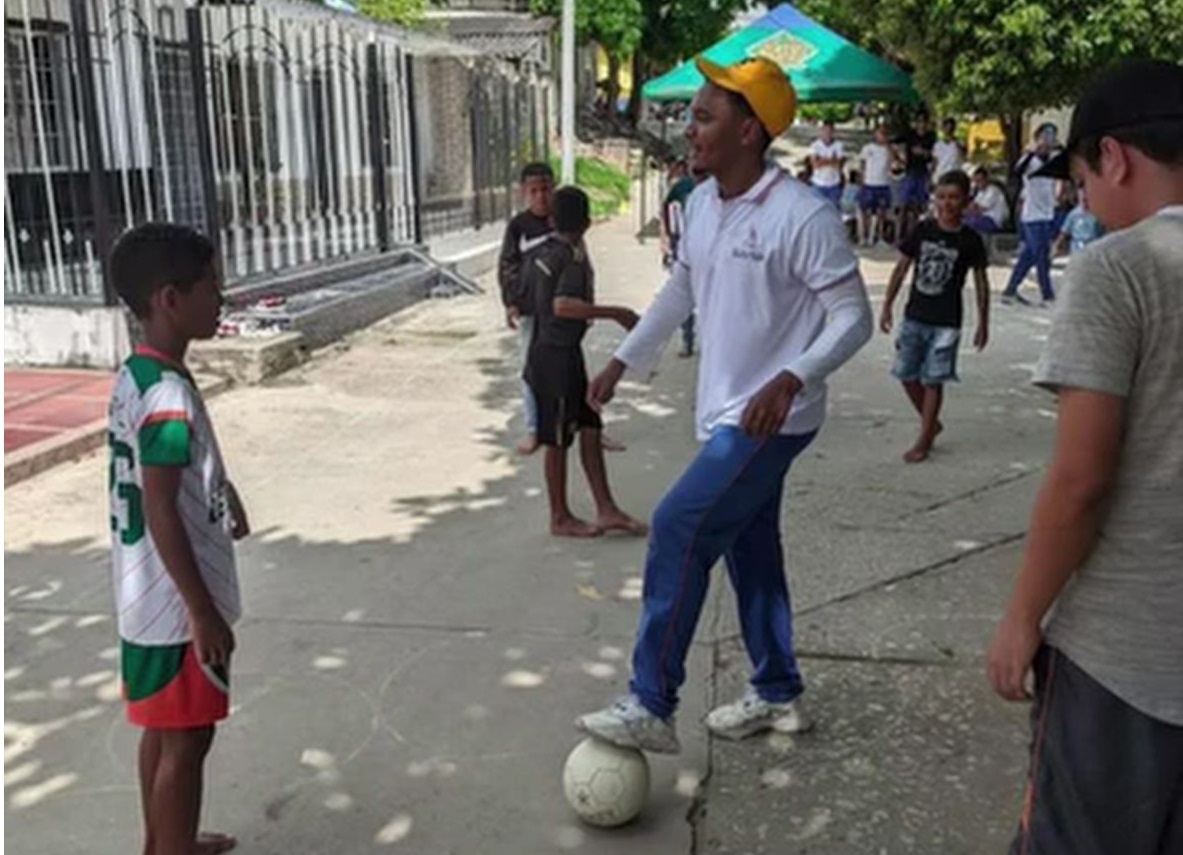
Many children attended school with nutritional deficiencies, which directly impacted their behavior, emotional state, and academic performance. I realized then that these weren't just isolated incidents, but rather an environment that holistically influenced their learning process. It was at that moment that I took it upon myself to contribute to transforming this reality, recognizing that I possessed a powerful tool: physical education. I began a detailed study of the student population to understand the causes of the behavioral patterns I observed. Various social, emotional, and pedagogical challenges arose, but I decided to address them through play, games, and pedagogical strategies specific to physical education.
Through structured, educational activities, the program identified the root causes of many behaviors and designed interventions to strengthen self-esteem, discipline, teamwork, and emotional self-regulation. After implementing these strategies, the results were evident: not only did classroom behavior improve, but academic performance in various subjects also increased. Physical education became a bridge to holistic learning and social transformation.