



By Valeria Moy Campos
General Director
Mexican Institute for Competitiveness (IMCO)
All major economic crises throughout history have triggered changes that are difficult to understand at the time and that only time allows us to fully appreciate. The 2020 crisis is no exception. The labor market is different, the incentives to motivate workers are different from what they were just a few years ago, we consume different goods and in different ways, and our worldview has changed.
Anyone who has been near a classroom in recent years has witnessed the changes. The rise of cell phones, the difficulty of holding a pencil to take notes, or even the inability to read a textbook for more than three minutes at a time have changed the way we teach and, of course, the way we learn.
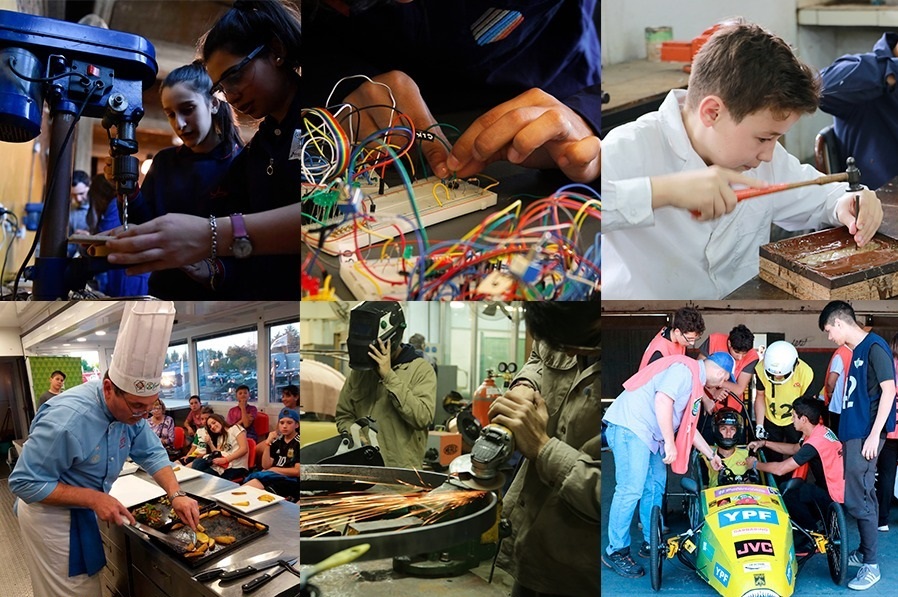
But the job market has also changed. Today, skills are more in demand than degrees, and abilities more than knowledge. How can we close the gap between what's happening in the educational system today and preparation for the world of work? Technical education—ideally implemented through a dual system—could offer some solutions.
Talking about technical education carries certain stigmas. We're stuck with the outdated idea of technical careers. Today, technical careers are more aligned with technology, digitalization, and automation. They tend to have high employability and don't require a bachelor's degree or an engineering degree that takes four or five years. There are many examples: cybersecurity, cloud computing, application design, network administration, 3D printing, predictive industrial maintenance, applied biotechnology, and energy efficiency.
Technical education should have enormous potential in Mexico, especially now that a new opportunity could open up to grow in certain industries within specific sectors, potentially replacing some Asian countries. But I use the conditional tense because it doesn't currently have that potential. In 2005, there were 8.2 million undergraduate students. That number grew to 20 million in 2024. Technical programs also had 4.1 million students in 2005, and by 2024 that number had decreased to 3.4 million.
We know theoretically that technical careers can be life-changing for millions of young people, but when universities open these programs, the probability of them closing within a few years is high. They don't find enough demand to meet the supply.
Part of the problem is that pursuing a bachelor's degree has ceased to be an academic choice and has become an aspiration. For many families, a university degree remains a symbol of mobility and prestige.
The challenge is cultural, yes, but also institutional. We urgently need a system that truly connects businesses and schools, provides certainty for young people, and constantly updates technical programs based on real demand. We require clear information on salaries, career paths, and employability so that choosing a technical career is not a leap into the void, but an informed decision.
And we need to break the idea that professional success only comes through a university degree. Mobility is also built on skills, continuous training, and flexible career paths, not just on lengthy degrees. If we want to close the gap between what we teach and what's needed for the job market, we'll have to dare to shed the bad reputation of technical education and build options that, more than just aspirations, become real opportunities.
This article was published in Moy, V. (2025, December 2). “The bad reputation of technical education.” [Opinion Article]. El Universal. https://www.eluniversal.com.mx/opinion/valeria-moy/la-mala-fama-de-la-educacion-tecnica/