


By Alexandra Villafañe Rojas
GOYN Youth Advisory Group Barranquilla
Do you think we choose our role in the world or is it imposed on us?Yes, it is a question whose answer could be somewhat complex; however, it is nothing more than thinking about how we have lived up to this point, how our parents, institutions, and people around us have been part of the identity development of our person.
Let me tell you, society in recent years has become a system governed by countless rules and roles that we are supposed to fulfill according to “our position in the world"Whether as a woman or as a man, But... is this okay?An interesting and very intelligent woman of science once said: One is not born a woman: one becomes one. (Simone de Beauvoir, 1949). Although emphasis is placed on the female sex here, the final reflection encompasses both men and women.
You might ask, why am I mentioning this topic? Simple, because of the simple curiosity it has sparked in my understanding. Why have women been raised based on a system of protection, as if we were not capable enough to assume "masculine roles"?For many years, we have been relegated to the care economy; that is, women are the ones who take care of the home, women are the ones who care for sick family members, women are the ones who must support the family—in short, all the responsibilities within the private sphere, which limits their access to formal, paid employment. Now, you might say, She's wrong, women do other jobs too!And yes, certainly today the opportunities for women to expand their knowledge and potential have transcended to more public spaces, But the fact that many inequalities still persist, mainly in the productive sector, cannot be hidden..
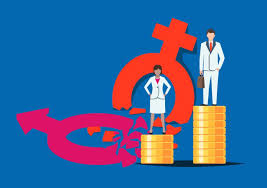
On the other hand, do you think it's fair that a society that proclaims justice, equality, and equity for all, even today, is It is estimated that globally women earn approximately 20% less than men (United Nations), or that only 48.7% of women participate in the labor market, compared to 78% of men (Forbes Mexico)And here we are not strictly talking about money, income and work, it goes beyond that, we are talking about dreams and hopes, about women who have lived in fear of not being capable enough to perform other tasks outside the private sphere, or who have created such strong mental barriers that they do not even allow themselves to think about the possibility of holding on to their own passions.
So, Is it women's fault for having such strong ideals?No, it's the fault of a social system that has shown them along the way how many of them have sown their lives in the gardens of others. They have been relegated to sustaining the economy and daily life, limiting their access to jobs and autonomy. And this isn't something I'm making up; although I certainly lean more towards the qualitative, I don't underestimate the importance of the quantitative, because how can we ignore figures that show us that Globally, approximately 708 million women do not participate in the labor market because they are engaged in unpaid care work (ILO)..
At this point, I don't want to go into detail with countless figures that all point to the same thing, but I would like us to talk a little about history.
I confess that During my school days, I sometimes found social studies classes a bit tedious; I always wondered: What good is it to me to know in what year or who achieved such a thing?, or why X or Y event occurred?A somewhat indifferent or apathetic thought on my part, I accept it, My teacher always told us, "At some point you will understand the importance of knowing history," and curiously enough, that's what happened. Today I understand the relevance of knowing the processes, circumstances, and contexts that have been part of the development of our societies..
So, since we're talking about gender inequalities here, let's remember that, during In the 19th century, many women began working in factories during the Industrial Revolution.especially in the textile industry. However, The conditions were very unfair: they were subjected to working days of more than 12 hours, much lower wages than men, and dangerous working conditions..
And what do you think happened? Exactly, a wave of dissatisfaction arose from the female gender. provoking massive marches and protests led by female workers of these factories, primarily in New York City, with the purpose of undermining the workers' labor rights. It should be noted that this tedious situation persisted for more than 10 years. Until, unfortunately, In 1911, a tragic event occurred that marked history: a fire in a textile factory in New York caused the death of 146 workers, most of whom were young immigrant women. The doors were locked and many were unable to escape; this event prompted reforms in labor laws.
You might think, "Of course, surely it is following this event that March 8th is declared International Women's Day!", but no, It wasn't until 1975 that this day was officially recognized, even though, by 1910, before the tragedy, Clara Zetkin, a very passionate activist, had already...At an international conference, she proposed that there be a day to honor the struggle for women's rights.
This is more than just a simple story; it lays the foundation for feminist struggles around the world, addressing the inequalities and injustices that have existed for centuries and still persist. And that's just one aspect of the issue; if we delve into other matters, such as gender-based violence, sexual and reproductive rights, political participation, and leadership… I'll probably end up writing like someone putting together a puzzle without a border: no matter how many pieces I add, I'll never finish it..
Speaking of other matters, here is one that concerns us, and is pleasing to me. It is the recognition of all those women who allowed us to take a step forward in these struggles; on the one hand, we have... Clara Zetkin, Rosa Luxemburg, Frances Perkins, Dolores Huerta, Flora Tristán and Emma TenayucaWomen who raised their voices and promoted the recognition of women's rights struggles, championed laws, founded unions, etc. Or what about Maria CanoMany of us surely heard of her at school; she was considered a pioneer in the defense of labor rights and in the participation of women within the Colombian trade union movement, breaking barriers in an era where women had almost no presence in public life (Banrep, AGN). Or others that, although they were not recognized, every grain of sand was of vital importance.
Their names are not just decorations in archived encyclopediasThey are a reminder that much of what many women, and even men, enjoy today is precisely thanks to them. Although surely none of those mentioned here will know of the previous citation, As a society, it is only right that we recognize good deeds..
Finally, we have reached the end of this reflection; however, before concluding, I would like to emphasize that This writing is nothing more than my sincere feelings about a situation that, as a woman and soon-to-be graduate, I will have to face.On the other hand, my intention has never been to discredit men's achievements because they too are victims of a system that discriminates against them, and I am aware that they have their own dilemmas. I simply invited us to think about the dynamics that unfold in our daily lives from a critical, empathetic, and honest perspective.
The path to women's dignity in the workplace does not end here; every step forward is an invitation to continue transforming reality..
References:
-
Simone de Beauvoir, The Second Sex (1949).
-
United Nations. (2025). Striving for equal pay in the labor market. ILO Office, New York. https://www.un.org/es/observances/equal-pay-day
-
Forbes Mexico. (2025). The gender pay gap persists globally, according to ILO figures. https://forbes.com.mx/la-brecha-de-genero-en-los-salarios-se-mantiene-a-nivel-global-segun-cifras-de-la-oit/
-
International Labour Organization. (2024). 708 million women are unable to participate in the labour market due to unpaid care work. https://www.ilo.org/es/resource/news/708-millones-de-mujeres-no-pueden-participar-en-el-mercado-laboral-debido
-
Bank of the Republic of Colombia, General Archive of the Nation of Colombia.