



By Randy Marquez
GOYN Alumni
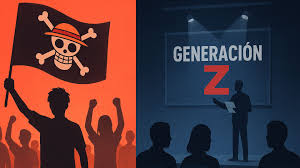
Kathmandu awoke under siege in September 2025. Thousands of young people, not summoned by political parties or led by historical figures, but by a collective impulse born on screens, in classrooms, and in neighborhoods, were on the move. Two months later, Uruapan, Mexico, burned with indignation after the assassination of Mayor Carlos Manzo. At both ends of the world, the same phrase became a rallying cry:
“We are neither left nor right. We are the generation that got tired of bowing our heads.”
What seemed like a couple of isolated crises ended up revealing a common script. Generation Z—born amidst algorithms, uncertainty, and inequality—decided to occupy the political space that had been denied them. And the echo of these uprisings is already being felt in Latin America.
Nepal: When the grid goes down and the street comes on
The spark ignited when the Nepalese government banned the use of social media. What it intended to control ended up multiplying voices.
“They took away the only tool that listened to us,” shouted a student as the protests grew until they led to the resignation of Prime Minister KP Sharma Oli.
The youth didn't just reject censorship. They denounced corruption, nepotism, and the narrative of a country run like a private club. The protest wasn't ideological: it was existential.
Mexico: the outrage that emerged from the silence
In Uruapan, the mayor's assassination triggered a wound that had been festering for years: living in fear. Young people who grew up normalizing violence took to the streets to demand something that should be basic: to stay alive.
Social media did the rest. Videos, live streams, and viral reports turned the mobilization into a national phenomenon. While the government insinuated “political manipulation,” the people in the streets insisted on their own truth.
One language: dignity
Although Kathmandu and Uruapan are more than 13,000 kilometers apart, their slogans resonate. In both contexts, young people grew up witnessing broken promises, slipping away opportunities, and political systems incapable of renewal.
The demand is global: dignity, justice, and transparency.
And that demand already connects with the Latin American reality.
What this foreshadows for Latin America
The uprisings in Nepal and Mexico serve as both a warning and a mirror. They reveal tensions that are already brewing in the region.
1. Traditional politics lost authority
Political parties no longer offer convincing answers. Latin American youth view the labels of “left” and “right” with distrust. They demand tangible results and consistency.
2. The street and the internet are the new parliament
What Nepal tried to censor is now the natural space where political identity is constructed. In Latin America, the struggle for meaning takes place simultaneously in public squares, hashtags, and live streams.
3. Criminalization no longer intimidates
Arbitrary arrests, curfews, and conspiracy narratives no longer stop the mobilization. Generation Z documents, publishes, and organizes in real time.
4. Emotional exhaustion is not invisible
The protests also bring anxiety, fear, and exhaustion. This, combined with limited access to mental health care in the region, can further strain the social climate.
The demand is not ideological: it is vital
This generation isn't fighting for historical symbols. It's fighting for the minimum conditions necessary to live.
-
Security
-
Decent work
-
Accessible education
-
Trustworthy institutions
It is the defense of a possible life, not of a political narrative.
A future where young people are no longer spectators
Generation Z decided not to inherit a broken system. In Latin America, that message feels like an unavoidable pressure.
The protests are not just a reaction. They are the beginning of a political reconfiguration where young people don't ask for permission: they create the agenda, change narratives, and transform forms of participation.
From climate collectives to citizen security networks, from digital ambassadors to neighborhood movements, this generation is inventing new languages of power.
Latin America is not facing a passing wave, but rather a generation that has stopped bowing its head. A generation that demands, that records, that summons, and that transforms. A generation that, from Kathmandu to Uruapan, is rewriting the future with the same word that today transcends borders:
DIGNITY